
 Search


Aleksei Sokolov
Lawyers, Human rights defenders
1973-05-24
Imprisoned
Yekaterinburg
write a letterBiography
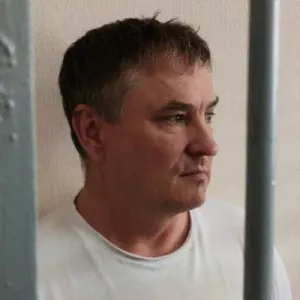
A resident of Yekaterinburg, a lawyer and human rights defender, specialising in the protection of prisoners’ rights. He was a member of the regional Public Oversight Commission for the observance of human rights in places of detention (ONK).
On 13 May 2009, he was detained and the following day taken into custody over a case concerning a robbery at an enterprise in Bogdanovich in June 2004. Sokolov later told his lawyer that police had threatened him with torture during the arrest, saying: “You thought you could control us, but no one can control the police. And now you’ve gone too far,
A resident of Yekaterinburg, a lawyer and human rights defender, specialising in the protection of prisoners’ rights. He was a member of the regional Public Oversight Commission for the observance of human rights in places of detention (ONK).
On 13 May 2009, he was detained and the following day taken into custody over a case concerning a robbery at an enterprise in Bogdanovich in June 2004. Sokolov later told his lawyer that police had threatened him with torture during the arrest, saying: “You thought you could control us, but no one can control the police. And now you’ve gone too far, human rights defender.”
On 31 July 2009, Sokolov was released from custody but, upon leaving the pre-trial detention centre, was immediately detained again. On 4 August, the court returned him to custody. By the time the case reached trial, he was accused of robbery at a Krasnoufimsk enterprise, theft of a safe in Yekaterinburg, and robbery in Bogdanovich. On 18 January 2010, the day before the first substantive court hearing, Sokolov was beaten in his cell by the prosecution’s main witness, Eevgenii Beliash. On 3 May 2010, the court sentenced Sokolov to five years in a strict-regime penal colony, finding him guilty of robbery in Bogdanovich and theft in Krasnoufimsk, and acquitting him on the Yekaterinburg episode. On 18 August 2010, the appellate court reduced the sentence to three years. On 27 July 2011, Sokolov was released on parole.
In October 2023, Sokolov was arrested for five days under the administrative offence of displaying prohibited symbols (Article 20.3 of the Code of Administrative Offences) due to the Facebook logo on the website “Human Rights Defenders of the Ural”. On 5 July 2024, a similar post led to the opening of a criminal case. On that day, he had planned to publish a video about torture of prisoners. Authorities came for a search, threw him to the floor, and questioned him about his position in the criminal world. The next day, reports emerged that the human rights defender had been beaten. The indictment stated that the materials on his Telegram channel contained deliberately false socially significant information. On 8 July, Sokolov was taken into custody.
In July 2024, Sokolov was registered in pre-trial detention as an “extremist.” In October 2024, it was reported that after returning from a psychiatric evaluation, he had been sent to solitary confinement twice: once for placing documents on an unoccupied bed belonging to another prisoner, and once because inmates from a neighbouring cell gave him table salt and immediately reported it to the guards. After one of these periods in solitary, Sokolov went on a hunger strike. Later, he was returned to his cell. On 4 January 2025, he was released afte a recognisance not to abscond was taken from him.
In June 2025, the case reached court for substantive consideration but was returned to the prosecutor due to procedural violations. On 24 September 2025, an appellate court overturned this decision and returned the case to the court of first instance.
On 16 December 2025, authorities came to Sokolov’s home with a search order in connection with a case on organising the activities of an "undesirable" organisation. The case was triggered by a complaint from the volunteer company of the "Combat Brotherhood” that Sokolov and two other lawyers were collaborating with the Norwegian Helsinki Committee and the National Endowment for Democracy. However, on 18 December, the human rights defender was taken into custody under a different charge — high treason. He managed to tell those present at the hearing that, according to the investigation, he had reported violations in the work of the Federal Penitentiary Service to foreign organisations, which was alleged to threaten Russia’s security.