
 Search


Alexandra Skochilenko
Artists
1990-09-13
Not in Russia
Saint Petersburg
Biography
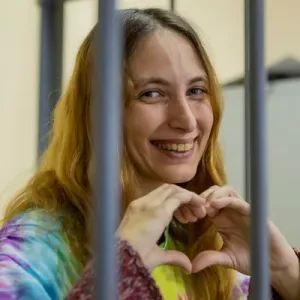
Resident of St. Petersburg, musician and artist. A criminal case on "fakes" about the Armed Forces was initiated against her because of a protest activity when she inserted leaflets with information about the Russian army's crimes in Ukraine into the price tags in a shop. On the morning of 11 April 2022, law enforcement officers went to the flat of Skochilenko's friend, whose house is 900 metres away from the shop where they found the price tags. What exactly was going on in the flat is unknown. That morning, Skochilenko received a message from her friend that they were
Resident of St. Petersburg, musician and artist. A criminal case on "fakes" about the Armed Forces was initiated against her because of a protest activity when she inserted leaflets with information about the Russian army's crimes in Ukraine into the price tags in a shop. On the morning of 11 April 2022, law enforcement officers went to the flat of Skochilenko's friend, whose house is 900 metres away from the shop where they found the price tags. What exactly was going on in the flat is unknown. That morning, Skochilenko received a message from her friend that they were "looking for a body" in his flat and asked her to come over. When she was on her way, the young man texted her that "everything was fine." Skochilenko's friends believe that law enforcers may have been texting from the friend's phone. When Skochilenko arrived at her friend's flat, she was detained. Later, her flat was searched. The interrogation lasted until 3 a.m. the next day. On 13 April, the court placed her in custody, despite her celiac disease - gluten intolerance. At first, Skochilenko was refused to be given food that she could eat, she was poisoned by her cellmates in the pre-trial detention centre. Later it became known that the artist was transferred to another cell with better conditions. In July 2023, at least four searches were conducted in Skochilenko's cell over a period of two weeks. During the last search she was not in the cell. The girl's belongings were scattered on the floor, her letters were trampled on, earplugs were crushed, a book was torn open and a daily dose of medication was seized. When asked what the searches were related to, the detention centre staff said that they were related to the price tags that had led to the case against Skochilenko. Since mid-July, the pre-trial detention centre stopped accepting books and introduced a restriction: each detainee could have no more than three books. In addition, there was no hot water in the showers of the detention centre. At the same time, referring to safety rules, detainees were forbidden to carry heated water from their cells in buckets, and were allowed only to use hard to carry basins to do so. In August, it was reported that Skochilenko was brought insufficient amounts of drinking water. On 15 September bailiffs sprayed tear gas at people who came to the hearing to support Skochilenko. On 29 September it turned out that due to the schedule of court hearings Skochilenko had not eaten anything for two days: she was escorted from the pre-trial detention centre before breakfast and returned after dinner, because of diagnosed celiac disease the girl was not given dry rations. Due to the late return to the pre-trial detention centre, the defendant also did not receive the neuroleptics and psychotherapy in time. On 16 November 2023, Skochilenko was sentenced to seven years of general regime colony. On 30 December it became known that the artist could not undergo the examinations prescribed by the doctor due to the refusal of the judge to approve her removal from the pre-trial detention centre to a civilian clinic. On 1 August 2024, Skochilenko was released as part of a prisoner exchange between the Russian Federation and other states. However, on 11 September 2024, a court of appeal upheld Skochilenko's sentence.